We affirm that artistic and cultural creation cannot be governed by the same logics as industrial production, because it works with a different material: the uncertain, the sensitive, the common.
To create is not to execute a plan, but to inhabit a situation, to listen to what emerges, to respond to what resists. It requires non-linear time, attention, frictions, detours. It requires engaged bodies and affects.
We reject the idea that efficiency can be measured solely in deliverables, deadlines, and abstract indicators. Artistic efficiency is relational: it is measured by the quality of the connections it weaves, the spaces it opens, the transformations — sometimes invisible — that it produces. What cannot be quantified is not therefore useless. What is unproductive in the economic sense may be vital in the social sense.
We also reject the figure of the isolated artist — a solitary genius or self-entrepreneur — forced to carry alone the risk, the vision, the exhaustion. This figure mirrors neoliberal management exactly: apparent autonomy, total responsibility, structural precarity. It prevents care, transmission, continuity.
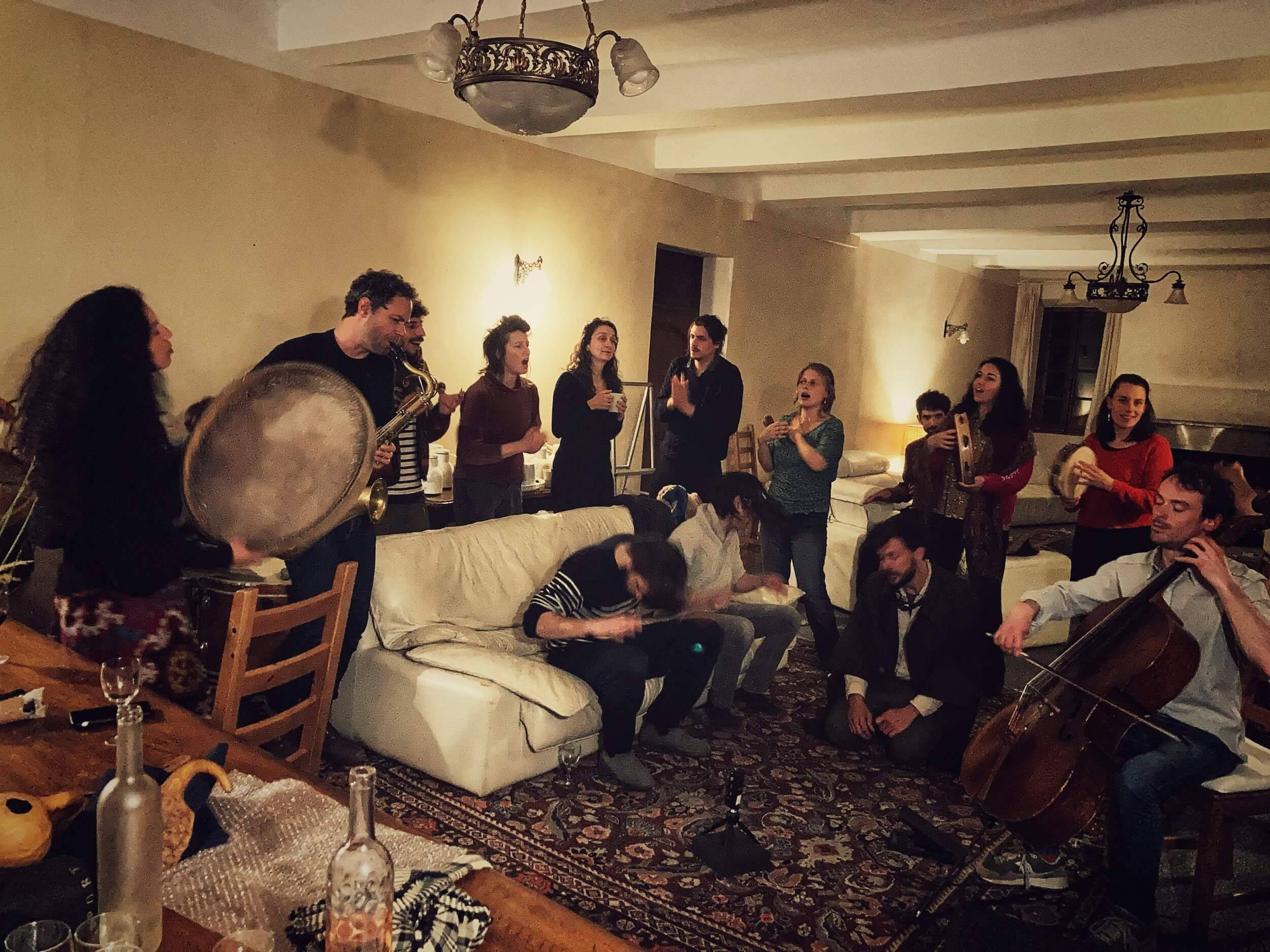
On the contrary, we affirm creation as a collective, situated, interdependent process. A work never emerges alone. It is crossed by places, conversations, visible and invisible infrastructures, often undervalued gestures: hosting, listening, logistics, mediation, administration, care. Making these contributions visible is already a redistribution of power.
Co-creation means that the framework is co-constructed, that rules are open to discussion, that roles are clear but not fixed. It implies that decision-making is proportional to impact, that those who do are also those who think, and vice versa.
We advocate for an authority that circulates.
An authority rooted in experience, listening, and trust.
An authority that can be challenged without being destroyed, and transmitted without being confiscated.
We accept that this takes time.
That it requires tools, training, spaces for dialogue.
That it sometimes fails.
Horizontality is not a natural state, it is a practice. It is built against our internalized hierarchical reflexes, against the fear of conflict, against the habit of delegating power and responsibility. It requires unlearning as much as learning.
To co-create is to politicize our ways of doing.
It is to recognize that organization is already a discourse.
It is to make our processes an extension of our values, rather than their silent contradiction.
We seek living, adaptable, situated forms.
Practicable micro-utopias.
Spaces where work becomes part of life again, without devouring it.
This manifesto is not a conclusion.
It is an invitation.
To experiment, to document, to share.
To make creation a place of real emancipation — for those who create as much as for those who receive.
Within this logic, we take one step further:
we choose giving.
Here, giving is explicit and shared.
Each person gives what they can: time, a skill, a perspective, energy, an idea, a presence, funds.
Each chooses their level of commitment, their limits, their rhythm.
We accept that this space is fragile.
But we believe that what is lived there — encounters, inner shifts, shared imaginaries — infinitely surpasses what could be bought.
To give, here, is to trust.
To trust others.
To trust the process.
To trust that something will happen, precisely because nothing is required.
And if it fails, then that failure will also be shared knowledge. A collective experience. A trace. Because even what produces nothing can transform deeply.
We believe that everyone gives according to their possibilities.
Artists offer their time, their listening, their know-how.
Curators offer their sensitivities, their intuitions.
Organizers open their homes, commit their living forces, their daily energy.
The public offers its presence, its attention, its participation.
Founders and supporters offer their trust, and a concrete energy that allows all this to exist.
Here, there is nothing to take.
There is everything to share.
We call for a form of sensitive philanthropy —
one that listens before calculating, that supports poetry, slowness, connection.
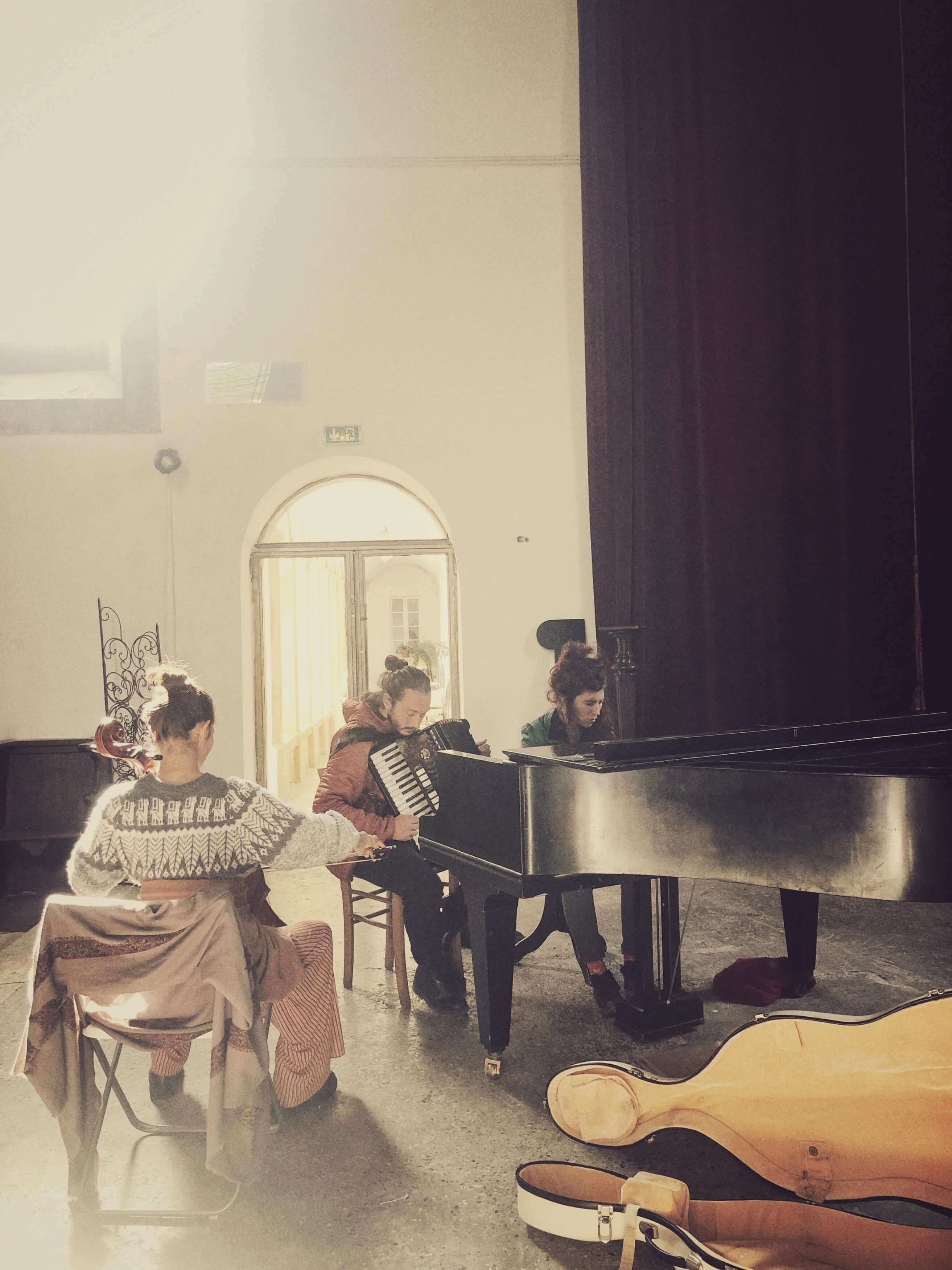
Each donation, whatever its amount, contributes to making La Symphonie possible, creating the conditions for a simple and true moment, on a human scale, with a certain yet unpredictable radiance.
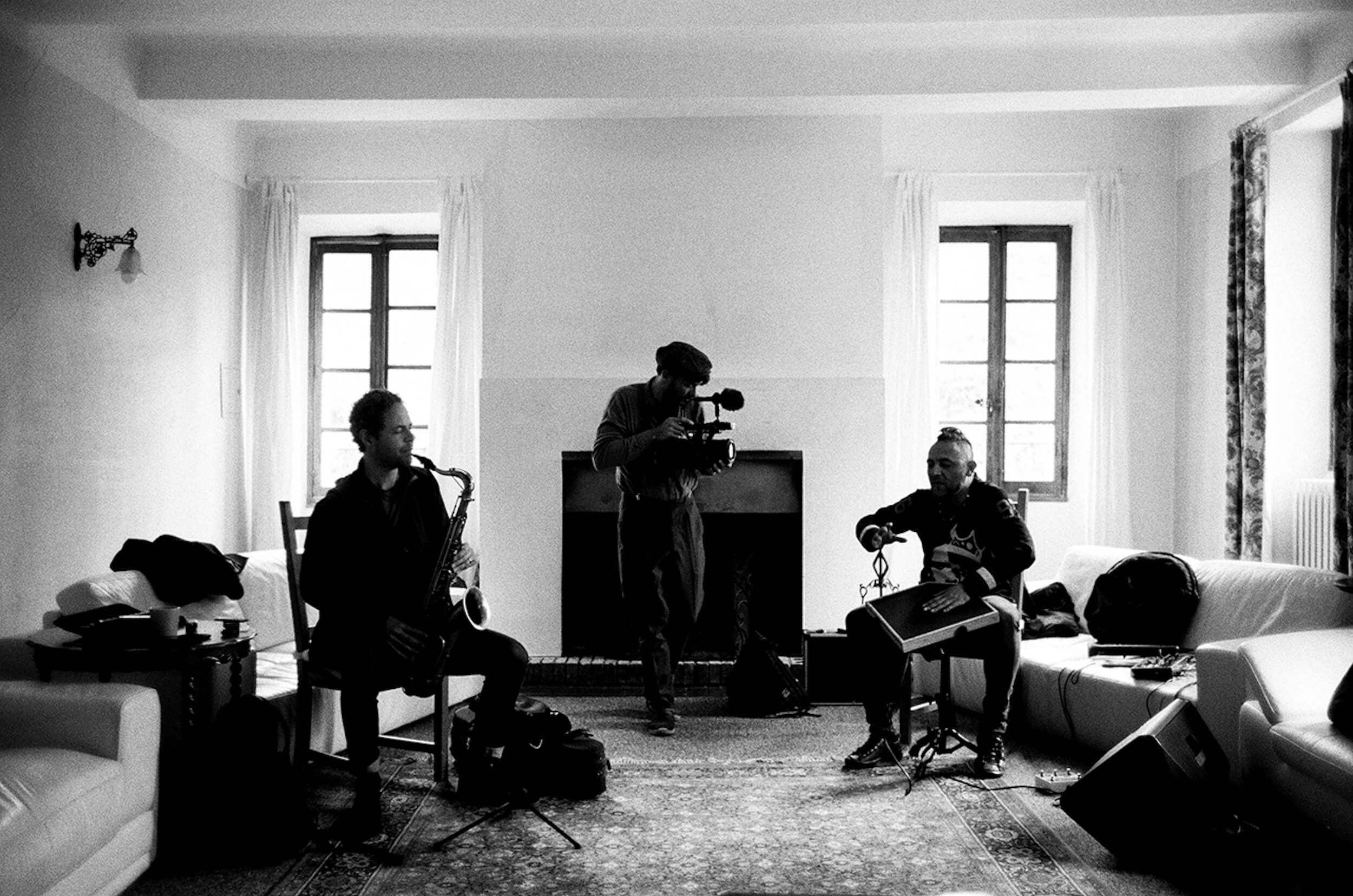
Recordings and films will be made from this experience. They will be freely shared, published under Creative Commons, as an extension of the gift, an open echo beyond time and place.
There is no symbolic threshold, no mandatory public recognition, no hierarchy between contributions.
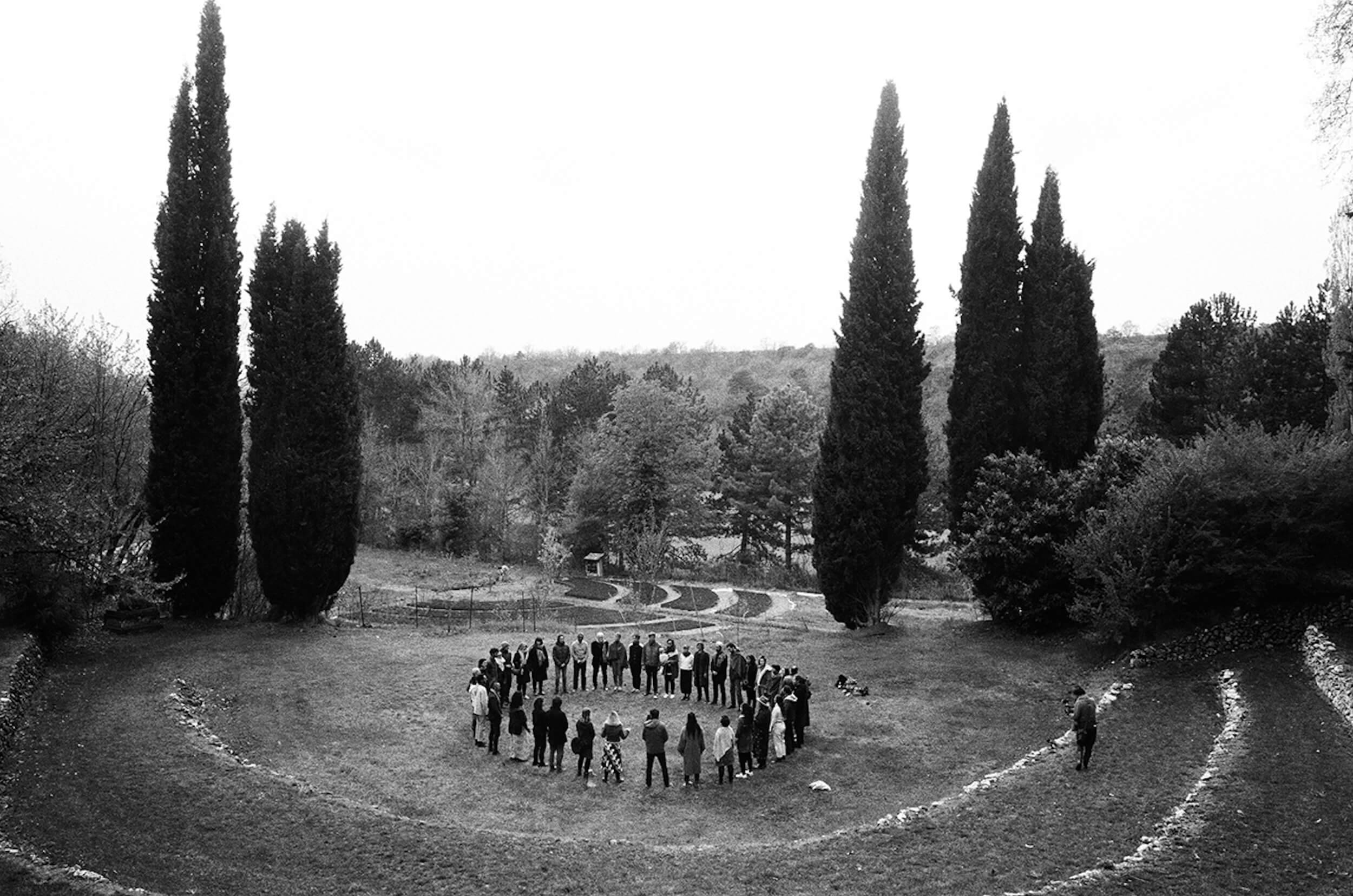
There is only a circle of people who choose to say: yes, this deserves to exist.
If you wish to participate, do so at the level that feels right for you, and we thank you not for what you give, but for the gesture itself.
Supporting La Symphonie means supporting another way of doing things: gentler, more human, more attentive. And supporting one another seems to us to be what our times need most.
Credits and transparency:
This text draws heavily from various theoretical currents, integrated and inspired by multiple previous works, such as the anthropology of the gift (Marcel Mauss, The Gift), critiques of labor and value (Karl Polanyi, David Graeber), sociology of organizations and hierarchy (Crozier & Friedberg, Mintzberg, Laloux), practices of horizontality (self-management, commons, popular education, organizational feminism), as well as numerous artistic experiences and reflections on process, care, and unproductivity. It was written by Julie Henoch, expanded through exchanges with an artificial intelligence (ChatGPT) used as a thinking tool, and reviewed and refined with Vincent Moon and Julien Colardelle.